Stop Blaming Your Ping: Pros Spill What Gear Actually Matters (and What's a $200 Scam)

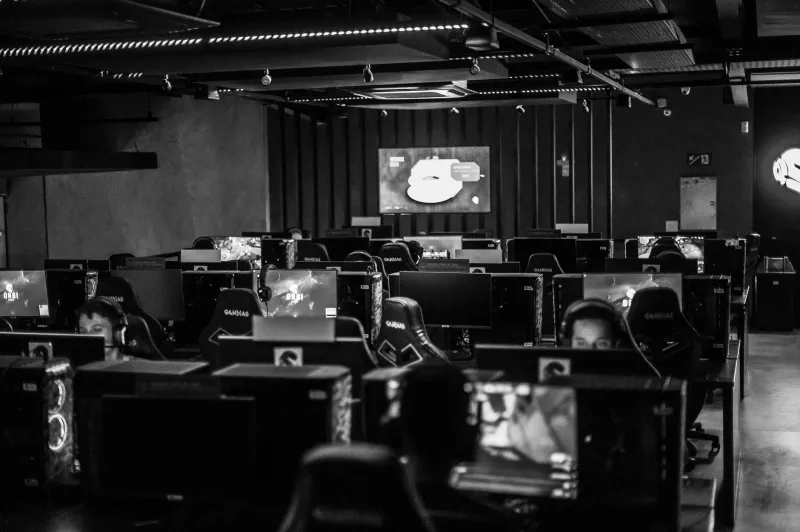
Photo by Photo by ELLA DON on Unsplash on Unsplash
Every gamer knows the ritual. You drop a ranked match, you're tilted, and suddenly the algorithm serves you a 45-minute video titled 'The ONLY Monitor Pros Use.' Three clicks later, your cart has a $200 controller in it and your bank account is sending passive-aggressive notifications.
But does any of it actually matter? We asked a handful of semi-pro and grindset-adjacent competitive players to rate the gear market with zero filter. Their answers ranged from 'legit' to 'please stop buying this.'
The One Upgrade Everyone Agreed On
Not the monitor. Not the controller. The chair? Not even close.
'Audio, hands down,' says Marcus, a semi-pro Valorant player from Texas who asked us to use his first name because his org hasn't announced him yet. 'A $60 headset with decent positional audio beats a $300 one with garbage soundstage. If you can't hear the flank, no refresh rate saves you.'
Every player we spoke to put sound in their top two. In tactical shooters and battle royales, information is the real meta, and footsteps are free intel.
The Tier List Nobody Asked For (But Everyone Needs)
Based on our conversations, here's how the gear hierarchy actually shakes out:
S-Tier — Legit Game-Changers
- A 144Hz+ monitor (if you're still on 60Hz). This was unanimous. Going from 60 to 144 frames is the single biggest felt upgrade in competitive gaming. Past 240Hz? Diminishing returns for us mortals.
- Wired peripherals. Latency isn't a myth, and batteries aren't a personality.
- A mouse that fits your hand. Not the one your favorite streamer is paid to use. The one that doesn't cramp your grip in hour three.
A-Tier — Nice, Not Necessary
- Mechanical keyboards. Great feel, marginal advantage. Nobody is winning a tournament because of their switches.
- A second monitor. Quality of life king, skill ceiling neutral.
F-Tier — Expensive Placebos
- The $200 'pro' controller. Unless you're on a fighting game circuit or you genuinely use back paddles, a $60 controller does the same job. One player called premium controllers 'skin tickets with extra steps.'
- Gaming chairs with racing stripes. 'Buy an office chair from a actual furniture store,' Marcus said. 'Your back doesn't care about branding.'
- Cable management as a performance upgrade. It looks clean. It does nothing.
The 60/40 Rule
The most useful framework we heard came from a League semi-pro in Ohio: 'Gear is maybe 40% of your ceiling, and you hit that ceiling way cheaper than marketing wants you to think. The other 60% is reps, VOD review, and sleep.'
Translation: if you're hardstuck Gold, a new mousepad is not the missing piece. Your crosshair placement is.
Budget Builds That Punch Way Above Their Price
Want the pro-adjacent experience without the pro paycheck? Here's the consensus starter pack:
- Monitor: Any 144Hz, 1ms panel in the $130–180 range. Brand snobbery starts at 240Hz, not here.
- Headset: A solid $50–70 pair with a flat, neutral sound profile. Skip the bass-cannon 'gaming' headsets.
- Mouse: $40–60, lightweight, shaped for your grip. That's it. That's the whole secret.
- Keyboard: Whatever mechanical board is on sale. Seriously.
Total damage: roughly $300 for a setup that would embarrass your 2019 self.
The Real Talk
Here's the uncomfortable truth the gear industry doesn't want trending: most upgrade purchases are tilt management, not performance optimization. We buy things because buying feels like improving. It isn't.
Fix your settings, fix your sleep, queue up again. The gear will still be there when you've actually earned it.